Stephen
Booth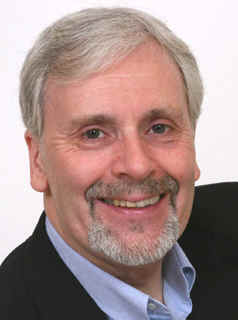 A
newspaper and magazine journalist for over 25 years, Stephen Booth was born in
the English Pennine mill town of Burnley. He was brought up on the
Lancashire
coast at Blackpool, where he attended Arnold
School. He began his career in journalism by editing his school magazine,
and wrote his first novel at the age of 12.
A
newspaper and magazine journalist for over 25 years, Stephen Booth was born in
the English Pennine mill town of Burnley. He was brought up on the
Lancashire
coast at Blackpool, where he attended Arnold
School. He began his career in journalism by editing his school magazine,
and wrote his first novel at the age of 12.
After
graduating from
City
of
Birmingham Polytechnic
(now
Birmingham
City University), Stephen moved to Manchester to train as a
teacher, but escaped from the profession after a terrifying spell as a trainee
teacher in a big city comprehensive
school.
Starting
work on his first newspaper in Wilmslow, Cheshire, in 1974, Stephen was a specialist rugby
union reporter, as well as working night shifts as a sub-editor on the Daily
Express and The Guardian. This was followed by periods with local newspapers in
Yorkshire, Nottinghamshire and Derbyshire. He was at various times Production
Editor of the Farming Guardian
magazine, Regional Secretary of the British Guild of Editors, and one of
the UK's first qualified assessors in Production Journalism.
Freelance
work began with rugby reports for national
newspapers and local radio stations. Stephen
has
also
had articles and photographs
published in
a
wide
range
of
specialist
magazines,
from Scottish Memories
to
Countrylovers
Magazine,
from
Cat World
to
Canal and Riverboat, and
one
short
story broadcast on BBC radio. In 1999, his writing career changed direction
when,
in
rapid
succession,
he
was
shortlisted
for
the Dundee Book Prize and the Crime
Writers'
Association
Debut
Dagger competition
for
new
writers,
then
won
the
£5,000 Lichfield Prize for his
unpublished
novel The
Only Dead Thing,
and
signed
a
two-book
contract
with
HarperCollins
for
a
series
of
crime
novels.
In
2000,
Stephen's
first published novel, Black Dog, marked the arrival in print of his best
known creations
- two young
Derbyshire police detectives, DC Ben Cooper and DS Diane Fry.
Black Dog
was the named by the London Evening Standard as one of the six best crime novels of
the
year
- the only book on their
list written by a British author. In the USA, it won the Barry Award for
Best British Crime Novel and was nominated for an Anthony Award for Best First
Mystery. The second Cooper & Fry novel, Dancing with the Virgins, was
shortlisted for the UK's top crime
writing award, the Gold Dagger, and went on to win Stephen a Barry
Award for the second year running.
In
2003, Detective Constable Ben Cooper was a finalist for the Sherlock Award for the Best Detective
created by a British author, thanks to his exploits in the third book of the
series, Blood on the Tongue. The publication of Blind to the Bones
that year
resulted
in
Stephen winning the
Crime
Writers'
Association's
'Dagger in the Library' Award, presented to the author whose books have given
readers most pleasure. The same book was nominated for the Theakston's
UK
Crime
Novel of the Year award in 2005. Subsequent titles
have
been
One Last Breath,
The Dead Place
(both
finalists
for
the
UK
Crime
Novel
of
the
Year
in
2006
and
2007), Scared to Live, Dying
to
Sin, The Kill Call, Lost River, The Devil's Edge, Dead and Buried,
Already Dead, The Corpse Bridge, The Murder Road, Secrets of Death, Dead in the Dark,
and most recently Fall Down Dead. A
special
Ben
Cooper
story,
Claws,
was
released
in
2007
to
launch
the
new
'Crime
Express' imprint,
and was re-issued in April 2011.
All the
Cooper & Fry novels are set in England's beautiful and atmospheric Peak District.
The
Peak
District
National
Park
Authority
featured
locations
from
the
Cooper
&
Fry
series
in
their
new
Peak
Experience
visitors'
guides,
recognising
the
interest
in
the
area
inspired
by
the
books.
The
Cooper & Fry series is now published by Little,
Brown in the UK and by the Witness
Impulse imprint of HarperCollins in the USA. In addition to publication in the
US,
Canada,
Australia
and
New
Zealand, translation rights in the series have
so
far
been sold in sixteen
languages - French, German, Dutch, Italian, Swedish, Danish, Finnish,
Norwegian,
Spanish,
Portuguese, Russian, Czech, Romanian,
Bulgarian, Japanese and Hebrew.
In 2025 Clapperboard Studios
created a 'Cooper and Fry' drama series for Channel 5, starring Robert
James-Collier (Downton Abbey) as Ben Cooper and Mandip Gill (Dr Who) as Diane
Fry. Season 1 consisted of four two-hour feature length epsiodes based on four
of the earlier Cooper and Fry novels - BLACK DOG, DANCING WITH THE VIRGINS,
BLIND TO THE BONES and DYING TO SIN.
A standalone novel by Stephen Booth, Drowned Lives, was
published in August 2019, set in Lichfield, South Staffordshire and with a historical
theme.
While
living on a smallholding in Yorkshire, Stephen began breeding pedigree dairy
goats
as
a
hobby
(and
as
an
extreme
contrast
to
working
in
busy
news
rooms!). He later served on the British Goat Society's governing body and judged at shows all over Britain. He has
been chairman of
several clubs, including the charity fund-raising Just Kidding Goat Society, and
probably his most unusual role was as a director of an artificial insemination company. Specialist publications he's been responsible for
include a book on
one of the country's oldest goat breeds, The Toggenburg.
He
is a former President of the Toggenburg Breeders
Society.
Stephen
left
journalism in 2001 to write novels full time. He and
his wife Lesley live in a village in rural Nottinghamshire,
England (home of Robin Hood and the Pilgrim Fathers). They have three cats.
In
recent
years,
Stephen
Booth
has
become
a
Library
Champion
in
support
of
the
UK’s
‘Love
Libraries’ campaign, and a Reading Champion to support the National
Year of Reading.
He
has
also
represented
British
literature
at
the
Helsinki
Book
Fair
in Finland,
filmed
a
documentary
for
20th
Century
Fox
on
the
French
detective Vidocq,
taken
part
in
online
chats
for
World
Book Day,
and
given
talks
at
many
conferences,
conventions,
libraries,
bookshops
and
festivals
around
the
world. He is a director of the regional writer development agency Writing
East Midlands and teaches crime writing courses
in
the region, as well as leading workshops for writers' groups, at writing
festivals, and in prisons. He is also the author of a standalone crime novel Top
Hard, set among the Nottinghamshire pit villages of the 1990s.
August 2019
--------------------------------------------------------------------------------------------------------------------------------------------------------------------------------
 FOR
GENERAL RIGHTS ENQUIRIES,
contact Teresa
Chris
FOR
GENERAL RIGHTS ENQUIRIES,
contact Teresa
Chris
at
the
Teresa
Chris Literary Agency,
43 Musard
Road,
London
W6
8NR.
phone:
0207
386
0633
(from
outside
the
UK:
+44
207
386
0633)
FOR
TV & FILM RIGHTS, contact Emily Hayward-Whitlock
at
The Artists Partnership,
11-29 Smiths Court, Soho, London W1D 7DP.
phone: 0207 439 1456
----------------------------------------------------------------------------------------------------------------------------------------------------------------------------------
Find out more about the
Derbyshire Peak District
Back to Stephen Booth Home
Page